Walking and talking at 10 months. He graduated with his first Bachelor of Science in Biochemistry at 16. By 24 he was a tenure track Ph.D. at Stanford with his own administrative assistant.
He was miserable.
It was the poetry of the basic cell that charmed him. How it quivered in the agar agar and devoured the sucrose. How it cringed when the refrigerator malfunctioned and almost died. He could see the small thing shiver,
The cell had likes and desires. It had dislikes and burdens. So did Leo.
He read Byron. He called all of his cells she for they possessed all of them the ability to divide and become two. To reproduce.
He’d recite She Walks in Beauty when pipetting some new solution into the dish.
He said “Give me your good side, Sweetheart,” when he slipped them between a slide and admired their nakedness.
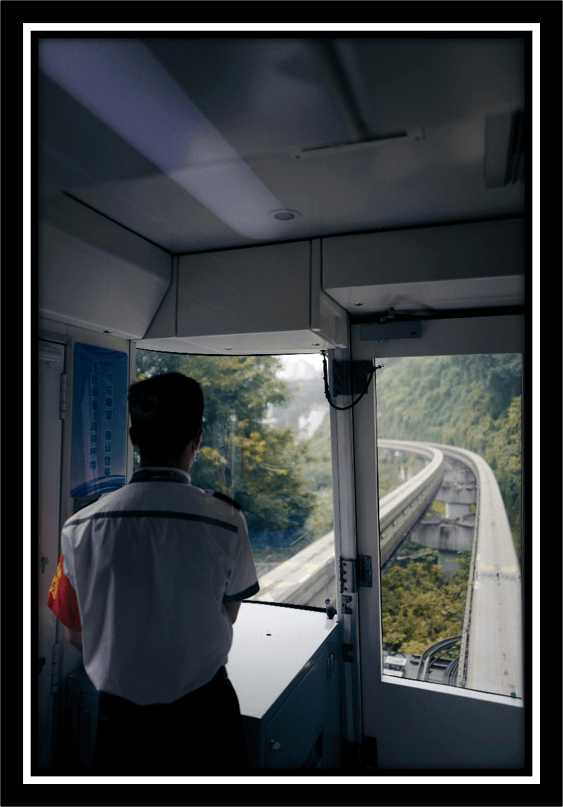
His mother had wanted all this for him, but Leo had always and only wanted to drive trains through the Rockies.
He tried to make the best of it. He did love his cells. But he wanted to hang his head out the window of the caboose and howl as the train descended 200 feet into a valley.
He was 30 when he called the Chessie system.
31 when they quit laughing and took him serious
He was 33 and 2 days old when he landed a job on the railroad.
He hadn’t told his mother. Her dad had been a railroad man with a different family in every depot.
She would keen and cover her still glossy Greek curls with a shawl and call the priest. But perhaps some vocations are genetic. His cells cried out for railroad tracks through the pristine mountains. For the howl.
Stanford was her dream, not his.
He tucked Lord Byron into his lunchbox that morning. He would tell his mom at the end of his shift.
Please! I am begging. I am. We are writers. Our words are or should be chosen with precision.
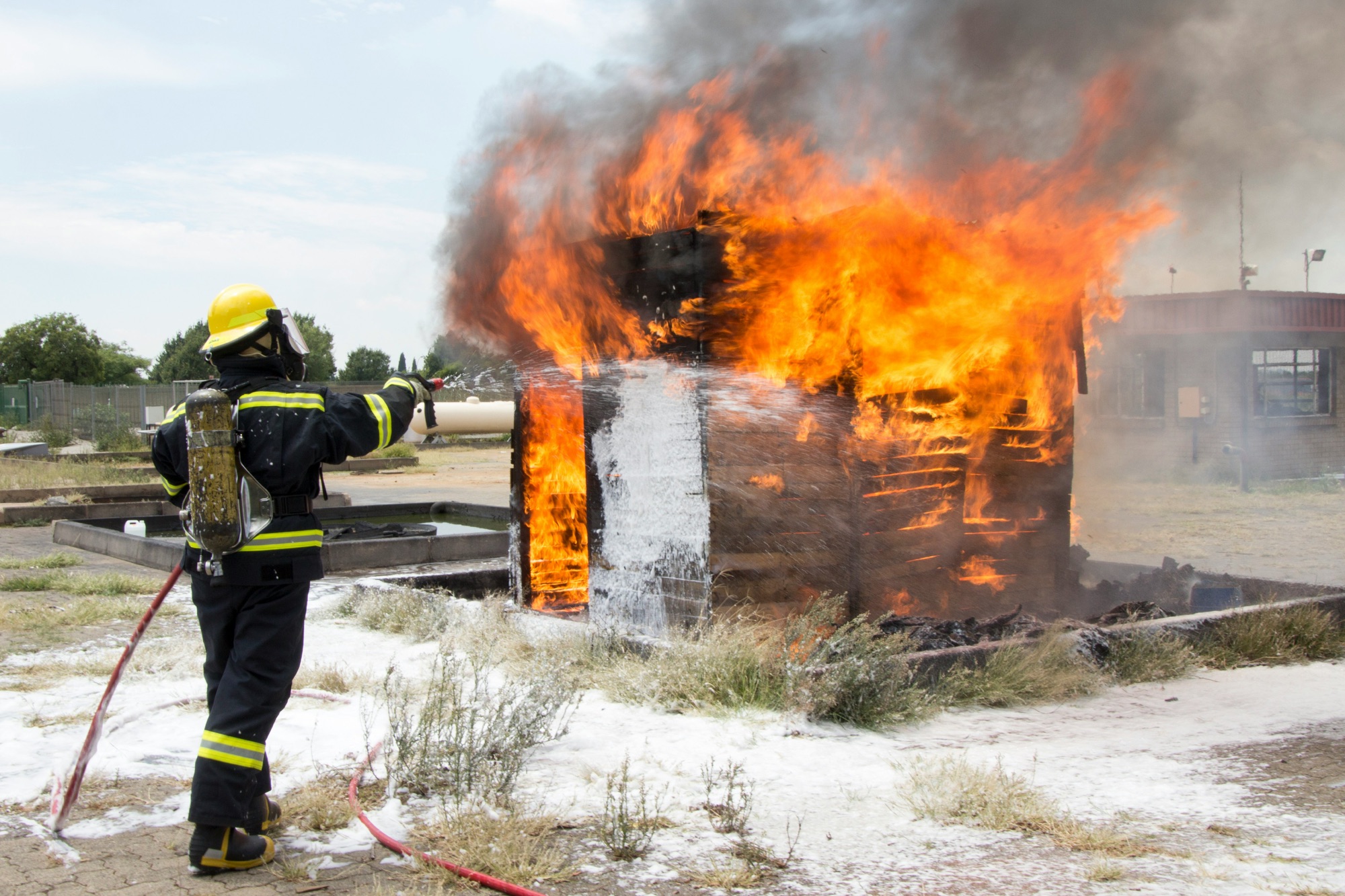
Stop for just a moment and consider the term dumpster fire. Define it.
Dumpster: large metal container used to hold garbage.
Fire: combustion or burning producing heat, light and smoke.
In other words: a dumpster fire is the burning of garbage within a metal container that may or may not produce noxious or poisonous smoke. They are generally easy to put out and not likely to spread.
Dumpster fire is in no way a metaphor for the current events the term is often applied to.
What is burning is not garbage. The fire is not easily put out. The harm is not minimal.
Lucy Goosey pulled her worn winter coat out from the back of the closet. Glancing around to make sure she was alone, she slid the dress out from underneath the coat.
The dress still had the tags on it. It was a size 8, and the color was Regal Blue. It fit every part of her, requiring no alterations.
After she cut the tags off, Lucy would tuck them into her scrapbook.
Lucy had never had clothing, other than underwear, that was storebought new with tags.
She kept the dress secret even from her mother, though it fair killed her. She did not want the gossip and speculation to start. She intended to surprise.
She laid the frock on her bed and spread the skirt. The color was glorious, and Regal Blue was the perfect description. The taffeta caught the early sun and glowed. With its full skirt and low neckline, Lucinda Marie Duval would command attention.
Lucy paid on the layaway for twelve weeks, doing without the few extras she allowed herself. She walked to work every morning and home from secretarial school every night so she could use her bus fare against the layaway balance – the one decreasing oh so slowly.
In celebration of her eventual achievement, the shop owner steamed the dress for free before expertly folding it to fit into the store’s signature box.
Once home, she lifted the dress, taking care not to disturb the tissue paper stuffed into the bodice and sleeves to prevent wrinkles. Lucy set aside the pink ribbon used to bind the box shut. She would wear it with her maid’s uniform.
She saved the pristine and sturdy white dress box.
Nothing in Lucy’s life served a single purpose. The gleaming dress would celebrate her betrothal or mark the end of a relationship stealing her youth. The Regal Blue frock might go on to serve as her wedding dress should they decide on a Justice of the Peace, but either way, it would end up in the window of the consignment store. The proceeds would be applied to the next semester’s tuition.
Johnny knew she, the woman he had nicknamed Lucy Goosey for her fluid dance moves, had been expecting a proposal for months.
Johnny changed the subject if the air between them felt palpable with expectation. He knew she was trying to find the words that would prod his.
Once she found those words, everything would change.
A few times when her expectation niggled at his brain, he sent his younger brother with a message that he was ill and would not be able to escort her to Smitty’s as planned.
Johnny was not prepared for the Lucy who greeted him at the door.
Everyone at Smitty’s would understand as soon as she walked in arm-in-arm with Johnny. If they did walk into Smitty’s. Moving from her doorway to Smitty’s might not happen.
The light from the floor lamp set her skin, her eyes, her hair, and the taffeta glowing. Johnny was on the porch, but the lamp lit his face as well.
Lucy watched his expression change and then change again. She did not need to say anything.
She was regal.
She wanted it understood she was not a supplicant. His first naked expression told Lucy he did understand. He knew he had until he walked her home to make the decision.
The niggle had failed him this day. Surprise had been achieved.
The splendor of the dress did not overpower her in any way. She was striking. She was tall. She was resolute.
Lucy was planning a future ablaze with certainty. She knew lots of people with promise who never found that future.
Still, her voice was soft when she said, “Shall we go now?”
Johnny held out his arm. She wrapped hers around it.
His voice as soft and gentle as hers had been, he said, “You are so lovely.”
Johnny would remember, for all of his life, the image of Lucy in the doorway.
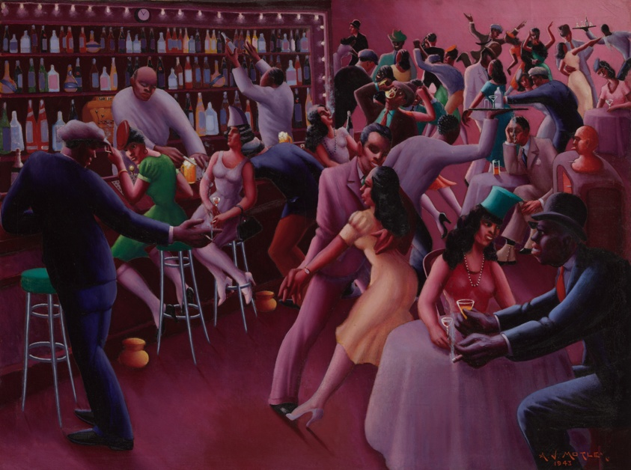
Lucy did love Johnny. He excited her and made her feel alive. They danced together like one body. She thought them well-suited in temperament, though she wasn’t sure his ambition matched hers.
Her future would fork left or would fork right this very evening. So would Johnny’s. The question was whether they would be arm-in-arm on the same fork.
Her mother and father had loved one another. As had his.
Though necessary, love can be not enough. Lucy understood that. Johnny suspected as much, but hadn’t allowed himself to think beyond the now.
He loved his Lucy Goosey, but he would never again call her by that name.
Now was slipping away and soon Lucy might too.
She slowed her pace to match his as he checked his watch.
My father, who worshipped knowledge and bequeathed that religion to me, used 3×5 cards and masking tape to label everything in our home when I was three.
table
chair
couch
television
telephone
door
bed
And then there was the 3×5 card he attached to his dog tags with a paperclip that said Daddy.
But I don’t really remember reading early. I may have known some words by sight, but I don’t think I was reading reading.
I have a vivid memory of walking home from first grade, puzzling over a Dick and Jane story. It had been worksheet time, and I finished early, so the teacher told me to look ahead in my book.
I encountered the word neighbor. All the phonics in the world wasn’t helping me with that sucker. I twisted those sounds and pronounced it aloud as I walked home (yes, alone, children were feral in the 1960s), and as soon as I rounded the corner and saw the elderly woman who lived in the house next to ours, whom I called Grandma Dot, it clicked. Neighbor.
I think that’s the day I really learned how to read.
From that moment on, I read everything I could get my hands on. I had library books, Scholastic Fair books, and, best of all, the grocery bags of books my mom bought for me at the local Goodwill and Salvation Army. And of course, the Weekly Reader. When those ran out, I read our World Book Encyclopedia. And one time, my dad came home to find his 8-year-old daughter reading the Taming of the Shrew in his collected works of Shakespeare.
I read the encyclopedia and the back of the cereal box and the church program and the owner’s manual for the car and anything else within arm’s reach when I had to, but I wanted story.
Someone wrote, or perhaps I heard it said at a conference or workshop,
The human brain is hardwired for story. We crave it so much that our brain tells us stories all night long and we call them dreams.
Or something like that.
I read voraciously, but I was also a social child. Cottoning on pretty early that it was rude to whip out a book and start reading when the conversation began to lag, I began oral storytelling.
In sixth grade, I was famous for holding court underneath the North Carolina pine trees after dinner and telling stories I made up on the fly. After the sun set, they became scary stories, and we all, including me, shivered with delicious fright as the tale was spun. Even I didn’t know how it was going to end.
I didn’t write them down.
By junior high, I knew I wanted to be a writer. I knew writers had to write to be writers, but there was something about the blank page that kept me from making a mark on it.
I only wrote for school assignments.
In high school, I fell in love with classic literature and gave up all hope of ever being able to write that well.
So, I was premed in college.
And then I dropped out when organic chemistry was close to stealing my will to live.
But I continued to tell oral stories to anyone who would listen. Some true. Some not.
When I feared my brain had turned to mush and was sliding out of my ear and down my neck, I re-enrolled in college a few years before my 40th birthday. It’s not germane to this discussion, but I eventually majored in Cultural Anthropology. The semester I took stats and theory, I was in desperate need of diversion and signed up for creative writing.
Doing what I always wanted to do with my GPA on the line kept me accountable. I mastered the blank page. It was dreck, but it was something.
And I found the state of being Diane Ackerman calls Deep Play.
Deep play is the ecstatic form of play. In its thrall, all the play elements are visible, but they’re taken to intense and transcendent heights.
My head, my heart, my soul, and my body were all in sync while I pounded keys trying to get the words into pixels before another synapse fired and they were gone.
I love the syncopation of my inner drum circle where id, ego, and superego jammed together, their beat thrumming through my body and my brain.
I write because it feels good. I write because I don’t just want to consume the needed story; I want to create it.
I write to be read. I think I have something to say that perhaps is of use to some people.
And I write to remember. I write to leave a legacy.
I write because that 6th-grade girl remembers the rush she felt when she knew her audience was leaning forward waiting for the next line.