
One-Time
Monthly
$3.00
$5.00
$8.00
$3.00
$5.00
$8.00
Thanks for your generosity!
Thanks for your generosity!

I’m letting a restorative wave crash over my life. One that will wash the beach clean of frustrations and angers, rid me of tension that leaves my spine stiff and sore, and will clear my mind of the endless chatter, chatter, chatter, chatter.
It’s been a long time coming.
Like waiting for a tsunami.
The warnings have been out for days, the nonstop preparations, the waiting, the waiting, the waiting. And then the sirens.
I don’t evacuate. I wish to be purged. To be changed. To be scrubbed clean by the raw power of the ocean.
And then the wave comes.
It is tall. It Is ferocious. It is just and nondiscriminating.
I am roiled in the water. Powerless. Not even flailing. Not panicking.
Just surviving one breath at a time.
And then it is over.
The beach is clean save for some interesting driftwood and a starfish.
I have a blank slate, and I can begin drawing – creating this new future – from scratch. I am both new and restored. A paradox that only the sea can explain.
Having now planted both feet firmly in the land of the post-menopause crones, I’ve noticed some changes I didn’t at first attribute to what the old women used to call The Change.
The chief one, the one that still has me shaking my head, is that chocolate is no longer always the answer.
Yeah, I know. I can’t believe I just wrote that either.
I liked chocolate as a kid. Almond Joys and Hershey’s with Almonds were favorites. Chocolate ice cream, chocolate milk. However, I equally enjoyed rainbow sherbet, lemon drops, lemon pie, and cherry turnovers. Japanese rice paper candy was a go-to for a few years.

And then — puberty. For approximately 45 years of my life, chocolate was always the answer if I wanted something sweet. More than that, I craved it. Like precision Swiss clockworks, the approach of my period found me in line at the drugstore next to my office buying the big 2 lb. bag of M&Ms with peanuts.
I imagine I needed the magnesium.
This was not a mere craving or a self-indulgent habit. No, it was a full-on medical crisis.
I would devour that entire bag before I left to go home for the day. My period would start within 12 hours of the bag’s opening and the popping of the first handful into my mouth. Yes. Handful.
Years later, when we finally hired a contractor and had the kitchen installed, I declared one of the pristine white cabinets reserved for chocolate. Reserved for my chocolate. Chocolate I wasn’t going to be sharing. My son and husband were forbidden to even peek inside, because by then, chocolate was a need much more often than just one week out of the month.
One time, my son had a friend over for a sleepover. The master bedroom is up in the loft, and the acoustics are such that I can hear from my bed a conversation happening in the kitchen better than I could hear if I were standing in the kitchen.
That night, cabinet doors were opening and closing. The refrigerator, the freezer. All to the soundtrack of pre-teen banter.
I hear the friend say, “Wow! Can we have these?”
I don’t know what the “these” were that he might have been holding up for my son’s approval. The cabinet was stuffed with everything from Belgian truffles to Oreos. An all-chocolate roll of Necco wafers, a tin of chocolate-covered pretzels, and elaborately decorated chocolate-dipped plastic spoons to stir coffee or hot chocolate.
There’s a pause.
I hear my son say,
“Not if. You. Value. Your testicles.”
Heavy emphasis on the you.
I had to roll over and muffle my laughter in the duvet.
Teach your children well, people.
About a decade later, the chocolate cabinet was moved to another wall when I took advantage of the installation of new flooring to tweak the kitchen design. By then, I was living alone. I didn’t need a designated chocolate cabinet. My stash was safe from predators. The little-bit-less-than-pristine white cabinet now holds cobalt blue barware – tiny ornate gems for Chambord, margarita glasses, martini glasses, handblown Mexican shot glasses for tequila, champagne flutes, and, of course, two styles of wine goblets. Many of the glasses have never been used to hold anything but dessert – often a chocolate mousse.
The red wine goblets traditionally got the most action.
This is another of the changes The Change wrought. I no longer NEED the red wine. In fact, it’s a problem now. Ditto coffee. My more than a pot a day is down to about three cups. Both libations do nasty things to my stomach. But the dazzling blue martini glasses get used for vodka martinis with two strips of lemon peel. Not one. Two. And I have plans to serve crème puffs filled with lemon curd and swathed in whipped cream in the oversized margarita coupes.
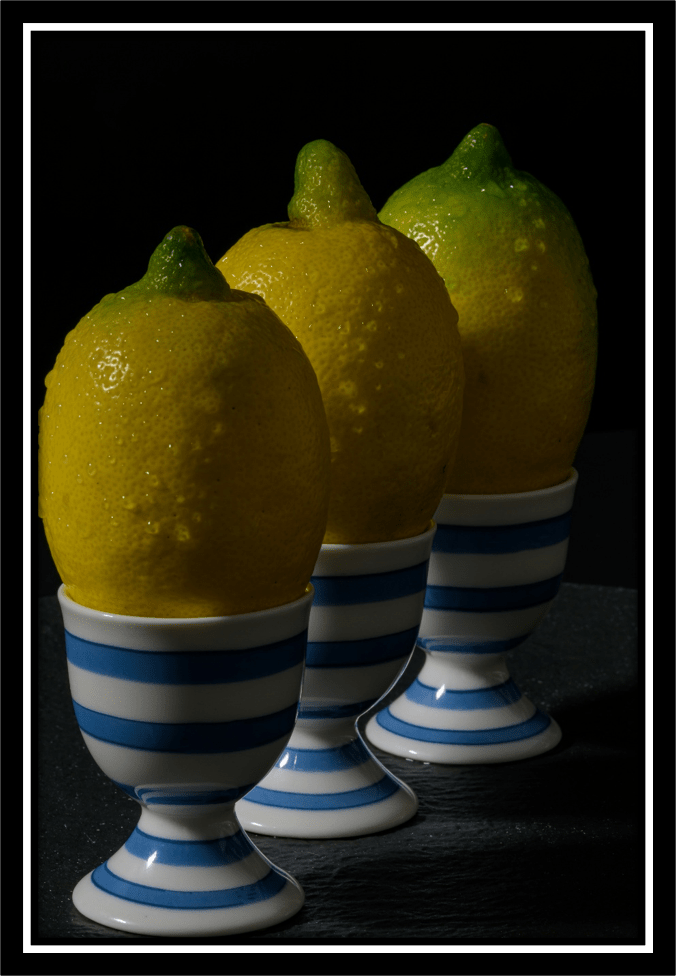
I am craving lemon. I’m buying lemonade – I haven’t drunk lemonade with any regularity since I was a kid. Starburst or Life-Saver gummies with all the citrus flavors find their way into my grocery buggy. The jar of lemon curd is already in my Amazon cart. Brach’s lemon drops when I can find them. Any old brand when I can’t.
I have even purchased a yellow blouse. I look dreadful in yellow, and I always have. I think it must be the association with lemon. I don’t think I have scurvy, so I’m not sure why my body is craving lemon, but I learned during The Change that arguing with it was fruitless.1
A few years ago, my mother asked what I wanted for my birthday dinner. I promptly answered fried chicken and lemon pie. The chicken was strategic. My mother is a competent cook, but her food is under-seasoned and often just not quite right in one way or another. She makes a few really good dishes, one of them being fried chicken. It is astonishing. I have tried and tried to duplicate it without success.
Lemon pie? Box pudding and frozen pie crusts. Forget the meringue, I want real whipped cream. That stuff in a can is fine. This was my childhood favorite in the pie category. I enjoyed standing at the stove stirring the pudding until the perfectly round gelatin capsule melted and released the lemon flavoring. Lemon pie was my birthday choice anytime we weren’t going out for dinner.
Even as I was eating my natal day celebratory meal of fried chicken and lemon pie, I marveled that my birthday treat did not involve chocolate nor was I washing it down with a robust Malbec.
I am now all about fruit desserts, candies, and other treats, with chocolate only sometimes being the answer.
Oh, the changes The Change has wrought.
1 I know. I couldn’t resist. I did try
The Instant Pot arrived with a blast.
In nanoseconds, my social media feeds were filled with folks I respect singing the praises of the Instant Pot.
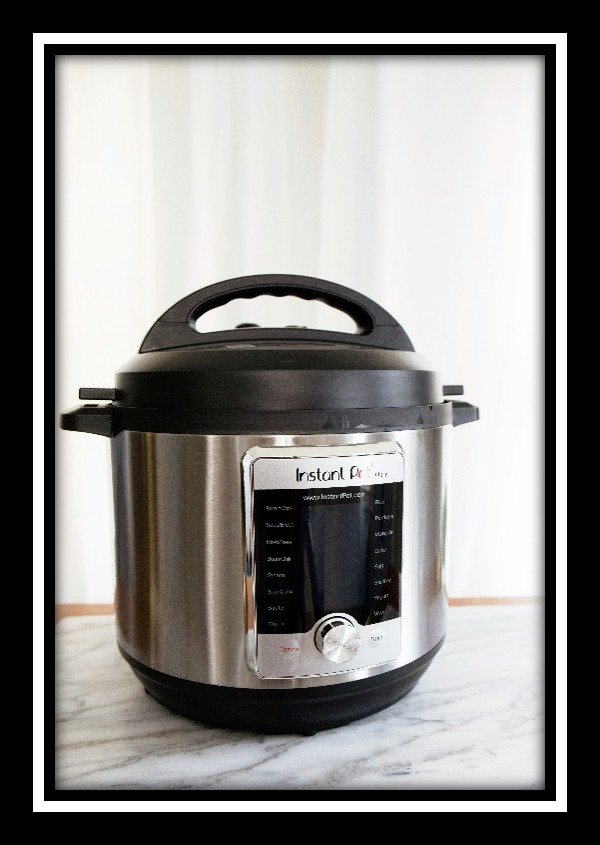
I am no slouch in the kitchen; I own nearly every kitchen gadget in existence. But after roughly 30 years of putting dinner on the table every evening unless I was hospitalized or had a pizza coupon, I was just over it.
Even a viral new gadget was not enough to tempt me.
Especially that one.
Near as I can figure, the Instant Pot is the New Millennium’s restyling of the pressure cooker my dad used for years.
I was terrified of that thing.
It started out innocently enough. A pot roast, some seasoning, and a few other secret ingredients were combined for a period much shorter than conventional pot roasting and turned out a plateful of wonderful. But to get to wonderful, I had to get through the rattling brass regulator that, at a certain stage, would start screaming while the heavy pan rocked and rolled in jeopardy of falling off the stove.
My dad, an artillery expert in the United States Marine Corps, would tell us to step back using his Captain Kinsey voice when he opened the pressure cooker.

I didn’t have to be told. Anything that made those movements and those sounds on a stovetop in suburban America circa 1971 was surely one of the demons released in William Peter Blatty’s runaway best seller, The Exorcist.
There was never a problem when my dad used the pressure cooker, aside from my stress response. I had heard tales. I knew facts. From where? I have no idea. Why or how a 12-year-old would be well-versed in pressure cooking cautions and disasters before Google is a mystery.
And so, my feed continued to be full of the awe of my friends who had received an Instant Pot for Christmas or Mother’s Day or their birthday, or because it was a doorbuster special on Black Friday. They shared results with photos, noting the cooking time with squeals. They traded recipes they had adapted. Whole communities were formed around the appliance.
[Instagram was emerging at roughly the same time. I kept calling it an Instapot. I know for a fact that unintentional perversion of the appliance’s name grated on more than one person’s nerves, and she took every opportunity to correct me.]
My feed was soon almost entirely Instant Pot and Wordle brags. (What happened to Wordle? I didn’t get into that either. I’m such a renegade.)
It was like a cult.
I stood back and tried to look interested and polite. I was not interested. Not in the least. I didn’t care that this incarnation of the pressure cooker could replace seven other needs: slow cooker, rice maker, Saturday night babysitter, warmer, yogurt maker, steamer, and bowling team sub.
I still didn’t want an Instant Pot or Instapot. It was nothing but a gussied-up pressure cooker manufactured in an era marked by shoddy workmanship and planned obsolescence.
I was afraid of the noisy monstrosity my dad used. I didn’t even like cleaning the damn thing, it scared me so much. I’m told the Instant Pot is quiet. That adds even more fear. I could hear the demons in my father’s pressure cooker clattering for escape.
Terror accompanied by silence can be expressed mathematically as:
Silent terror destroys the ultimate meaning of life.
At every gift-giving opportunity at the zenith of its popularity, someone would get that gleam in their eye. I would say assertively, “I don’t want an Instant Pot. I really don’t. I do appreciate the thought, but I will just return it. Please. I’m busy, please don’t add to my to-do list. I would prefer to receive nothing.”
So, of course, I was gifted an Instant Pot with no way to return it. Four years ago now, I think.
It is still in the heavy brown box UPS uses for shipping.
I’m going to stack the 6-month-old unopened shipping box holding the air fryer on top of the Instant Pot box.
I’m not afraid of the air fryer. I might even use it someday.
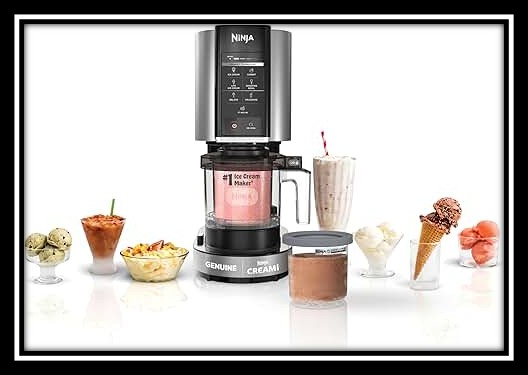
[I hear tell the Ninja CREAMi is the next viral gadget all the cool kids will be clamoring about. I’m kind of interested in it, but at more than $200, it is not going to complete my trinity of unused, unopened viral kitchen toys anytime in the near future..]

