Dawn is the sacred hour. We move from one world to the next accompanied by a dramatic lighting of this world.
Old Window in Finland by Helena Turpeinen, poster to View From My Window Facebook group
It wasn’t until my late 40s I was able to appreciate or regularly meet the dawn. If my sleep schedule ever regulates, I will miss these holy hours. I wake in the dark and cast off the stories my psyche told me while asleep and head for my beloved roll-top desk.
Dependent on the time of year, it could be some time before the dawning or just minutes.
But as I write the stories and sip coffee in silence, I glance over my shoulder through the atrium doors to look for the first arc of light.
It usually begins as a soft peachy pink rising with the fog over the hills and peeking through the trees. Dependent on weather and time of year, the color will sometimes intensify, sometimes wane, but always is a hearkening.
Here we are again. We made it to another day.
The silence is important.
Soon, the birds will start and the world will begin its hustle, but for a few minutes it’s just light and the creation of a new day, the creation of a new story to be told. Color on the silhouettes of the mountains bring me such contentment.
In twelve days, I will be on the shore of Lake Okeechobee in Florida. I’ve never been there before but I’ve seen sunset photos–another sacred part of the day. I am eager to nestle with my lover before leaving our bed to sit on the dock with my mug of coffee and journal. It won’t be silent – the lapping of the tide should, will, create its own sounds of peace. I am eager to see the Spanish moss hanging from the trees light up as the sun begins it ritual.
I’m sure I will photograph the scene in order to remember it, but I hope it imprints on my heart.
This is the sacred hour. Rejoice in the silence and witness the light. Turn to a new page and tell the story.
I realized there was something inherently strange about the way my mom’s brain works when she was about 35. Maybe 40. Someone told her a joke. The joke goes like this….
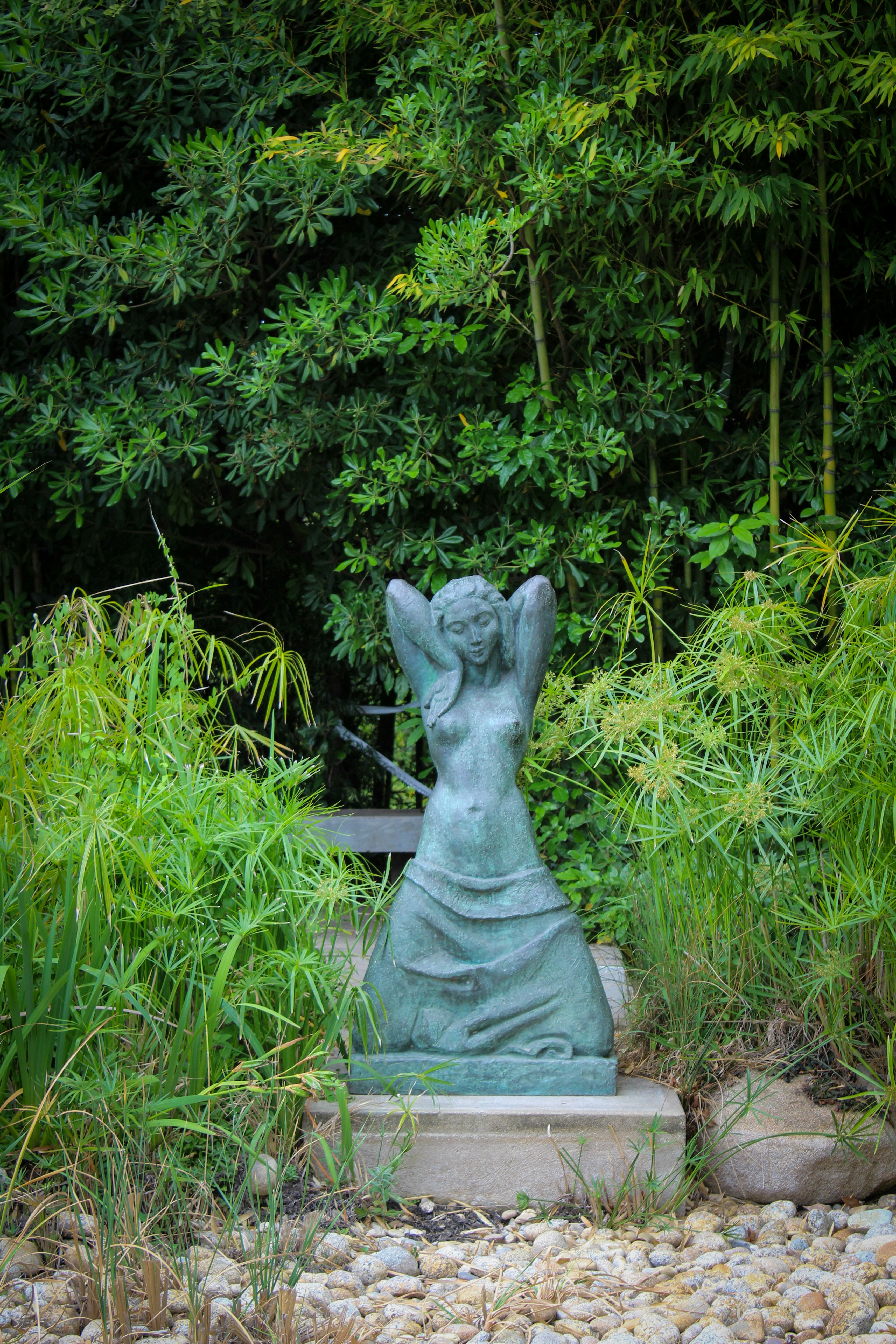
There was a statue of Adam and Eve in a public garden. They had stood there for a hundred years. Unable to speak. Unable to touch. Unable to keep one another warm in the snow. Year after year, they stood there. The snow came and went. The rain. The hot sun. Pigeons and squirrels. Mold and mildew.
By the time we get to the magical day, they were worn and pitted, spotted with pigeon shit, and generally in poor condition. A woodland fairy appears and tells them she is going to bring them to life for one day and for one day only. They can do anything they like. She gives them 24 hours to think about how they will spend their day.
At dawn, the following morning the fairy appears, says an incantation, waves her wand and the two statues come to life. Adam and Eve jump around in excitement, oblivious of their nakedness, and babble incoherently. Finally, they settle down and Adam says to Eve, “What shall we do? What have you most wanted all these years? Adam has a sly tone of voice and winks at Eve.
Eve says, “OK. Here’s the plan. You hold the pigeons and I’ll shit on them.”
Now I happened to be there when this joke was being told. I rolled my eyes. My mother laughed. And laughed. She spurts her coffee all over the diner table and nearly choked to death she laughed so hard. Tears coursed down her face, and she had to fan herself.
My mother’s reaction to the joke was far funnier than the joke itself.
Later that evening, we are sitting at the dinner table. My Dad asks how our day was. We all report on this and that. Eventually, Mom says, “Dean told a joke at lunch today. Wanna hear it?” My dad girded his loins. My mother’s inability to tell a joke without screwing up the punch line is legendary. In fact, I get my joke telling ability from her. I too tend to screw them up. Just typing the above joke was difficult.
Anyway.
My mother launches into the joke, looking at me now and again to check details. I am astonished, but she is doing a pretty good job. My dad is sort of puzzled. The joke does not seem to be the kind of joke my mom would normally enjoy. My mother is a Prude with a capital P in red glitter. She finally gets to the part where Adam is getting ready to say, “What shall we do?”
She starts to giggle. And then shake. Peas fall off her fork. She starts laughing in earnest. She is laughing so hard, she cannot finish. I start laughing at her trying to tell this joke. My father, a superb joke teller, is now all ears. He wants the punch line. He needs the punch line. He’s already making plans on who and when to tell the joke to.
By now, neither my mom nor I can breathe we are laughing so hard. I try to take a drink of water to sort myself out. I spew it all over the pork chops.
Mom can’t finish. Dad is amused, but impatient. “So, what’s the punch line?” My mom waves her arms and looks at me to deliver the last line. I still can’t breathe.
Finally, I manage to choke out, “You hold the pigeons and I’ll shit on them.” Only I said poop because at that age I would not have said shit in front of my parents.
My mother absolutely collapses in hysterics. For her, it’s even funnier the second time. My brother, who is just a kid, laughs.
My dad just looks at us. I try to explain that I didn’t think it funny either that I’m laughing at my mother, but by then, he’s laughing at the both of us.
I reminded my mother of this joke a while back. It took a while for her to dredge up the memory. And she almost had it, but couldn’t remember the joke or the punchline — she just remembered the two statues coming to life and how it was the funniest damn thing she’d ever heard.
So. I told her the joke. Without messing up the punchline.
She chortled. She howled. She had tears in her eyes and couldn’t breathe.
Again.
I laughed at her. I laughed with her. We both just laughed.
Saundra had an 11-hour layover in Paris. Eleven hours wasn’t enough particularly as she’d never been to Paris, but she was going to wring the last morsel of Parisian delight from every second. She spent as much time planning her layover as she did the trip to Amsterdam that was the reason for the trip.
Her son had once dated a woman who was a flight attendant. She swore Amsterdam put Paris to shame and was her favorite city of all the places she flew. Saundra wasn’t so sure. Amsterdam was business and she had to be on best behavior and would be in meetings all day and with colleagues in the evening. There would never be a moment to let down her guard.
In Paris, she would be free or as free as a finely tuned itinerary would allow.
She was allowing herself two hours to get out of the airport to the city and three hours to get back to the airport and through security. That left her with 6 hours. She would have lunch at a sidewalk café three streets over from the Louvre and then spend the rest of her time in the museum.
Saundra knew 5 hours at the Louvre was laughably short. Not near enough time. She had already made up her mind not to see the most famous of the exhibits, the Mona Lisa and whatnot, but to find the Renaissance gallery and explore it. It might not be much of a plan, but it was hers.
Things went like clockwork. She was actually off the plane and sitting at the sidewalk café within 70 minutes of deboarding. Woo Hoo. Extra minutes in Paris.
She sat at the table and soaked up the sun. She had chosen this one because Hemmingway used to drink here. Saundra wasn’t that big of a Hemmingway fan, but the literary pedigree intrigued her. She fancied herself a writer.
The waiter, rude as she had been led to expect, did not dampen her enthusiasm, or improve her high school French as she ordered poulet something-or-another and a glass of the house vin.
She was in Paris. Her food arrived and the presentation was beautiful. She decided to hell with looking like a tourist, put aside her self-consciousness, and took a photo of her food, the table, and then a selfie. All she was missing was a fanny pack and a red beret to be the Ugly American Tourist.
Saundra laughed aloud. And then said aloud, “I will remember this day always.” She had time to spare, so she ordered a second glass of wine, but drank it quickly. Perhaps too quickly. She noticed she was light-headed as she walked to the Louvre.
She loved that word. Louvre. Loved how her tongue rolled around in her mouth when she said it.
She was appalled to see a line of tourists at the museum. She’d thought they would have arrived earlier. Saundra begrudged every minute she stood in line waiting for security to paw through her things. Finally, she was in.
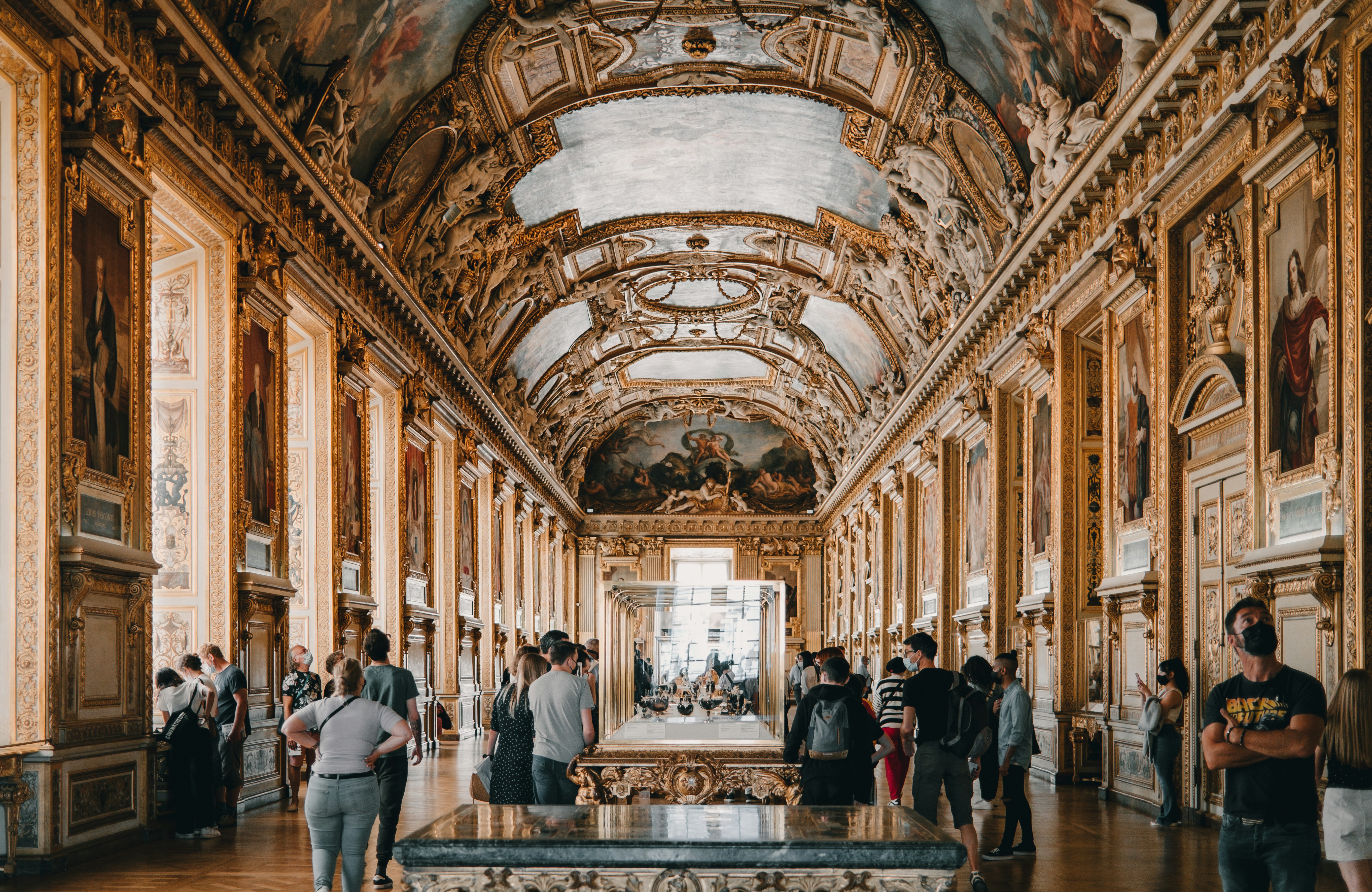
With her map in hand, she found the Renaissance gallery and ducked in. It wasn’t empty, but there weren’t hordes of people either. So far so good.
She went to the first painting, a landscape. She carefully read the card affixed to the wall next to it. There was far too much information. She decided to just look at the images. If she wanted to know more then she would read.
In this manner, Saundra wandered through the landscapes before reaching the portraits. She was on the fourth portrait when her jet lag stalled for a second and realization hit. She went back to the first portrait. A blonde countess, yes. But those eyes. Familiar. The courtier’s mouth. The courtesan’s hair. The washer woman’s hands. Those were her eyes. Her mouth. Her hair. Her hands. She continued. All of her body parts were represented. Even her breasts with the mole on the left one. She turned around to see if anyone was staring at her. No. Not yet at least. She kept her head down and walked quickly out of the gallery.
Too much wine. “That’s all,” she whispered to herself.
Headed down a sculpture gallery, again she was met with familiarity. The curve of her back. The tilt of her head. All in white marble.
She’d taken melatonin to sleep on the plane. Perhaps melatonin and vin ordinaire didn’t mix well. This just couldn’t be.
She nearly ran from that gallery. She checked her phone. She had more than 3 hours left to wander. She decided coffee was in order. She’d find the museum cafeteria, they all had one, and sober up. She hated to waste the time, but thus far she was not enjoying being an exhibition at the Louvre.
She found a docent and asked for directions. In haughty English, the woman directed her to the courtyard. By the time she got there, she was a wreck. En route she had passed more and more representations of herself. Each a little more complete in their likeness.
She went through the line and took her coffee to a littered table. Saundra didn’t care. She needed to sit down.
She drank the coffee quickly and decided to leave early. She was not enjoying herself and felt ill. Best to do so at the airport at her departure gate.
She kept her head down and looked at the floor as she quickly exited the museum. A security guard stopped her.
“Is Madame well? What is your hurry?”
Saundra tried to explain but after a few false starts, she simply said, “I need to get back to the airport. My flight leaves soon.”
“This way, Madame. Please. I need to search your things.”
She found herself in a small room with a female attendant. She had been instructed to remove her clothing and the attendant was wearing gloves.
This was not the hoped for Parisian experience.
Saundra would never return to France. She never made it to Amsterdam. It should be noted that she told people that she far preferred Amsterdam to Paris.


 W. Va. Fur and Root