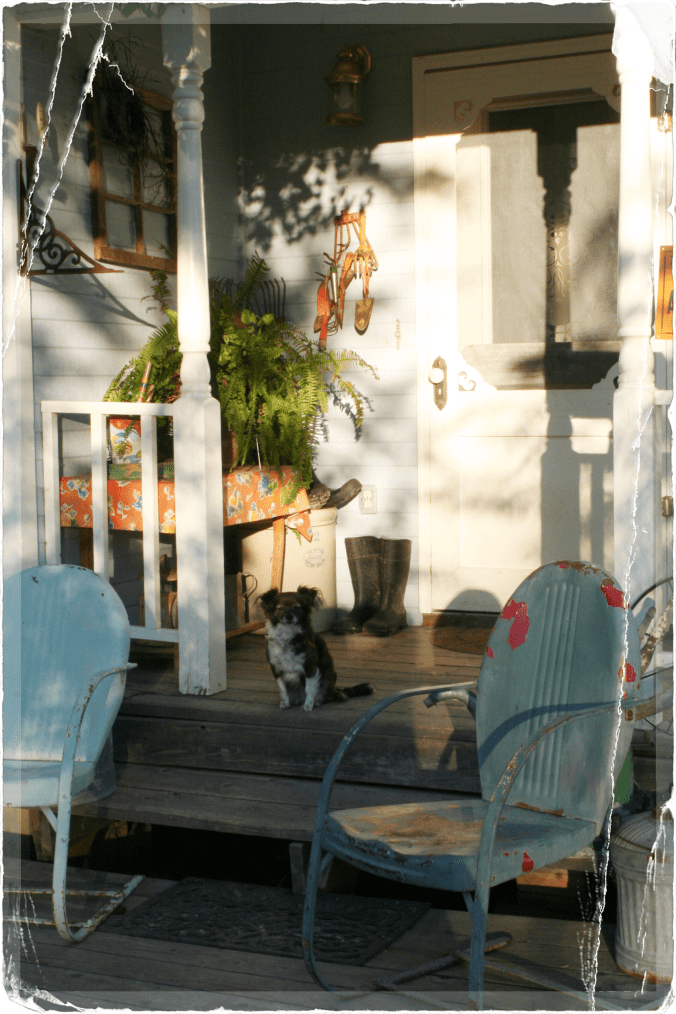
Good Morning
used with permission under a Creative Commons license
http://farm4.static.flickr.com/3003/2902461817_3edf478283.jpg?v=0
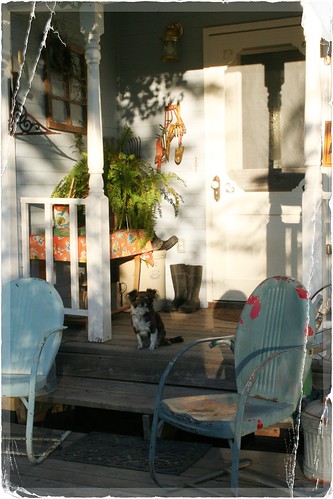
We are front porch people.
We sit on our porches in the evening, drinking coffee or a cold beer or sweet tea. We watch the lightning bugs, admire the petunias and Boston ferns that hang from hooks and glow in the evening sun. We talk to our neighbors – those people sitting on their front porch.
According to Dr. O. Norman Simpkins, one of the defining characteristics of Appalachians is our open-faced outlook. The hillbilly stereotype says we’re distrustful or bashful around strangers – out and out flapdoodle.
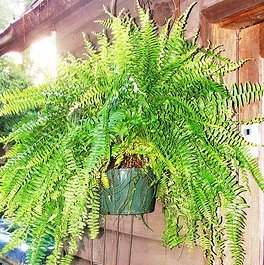
Boston Ferns
That open-faced outlook means we’re curious. In our smaller communities where everyone knows everyone else, we assume everyone knows everything about us and we act accordingly.
When I first moved back here from the wastelands of the frozen north, I was greatly heartened by – and shocked by – people’s penchant to tell me anything and everything. When we do meet someone we don’t know, the conversation immediately turns to questions. We try to find our commonalities; we try to find the places where our lives intersect; we try to become something other than strangers to one another. We do this in even the most casual of interactions.
A journalist writing a story on our obesity described his experience on the backroads as people gawking in shock at a new car. Balderdash. Those people were gawking out of curiosity. We have new cars. What we don’t have as a norm is New Yorkers driving the backroads. Those people were intrigued about why he was driving through their neighborhood. Had he stopped, we’d have been all over him with questions, plied him with refreshments, and told him our stories. Well we would have unless he got out of the car bearing an attitude of the Great Savior here to save us from ourselves.
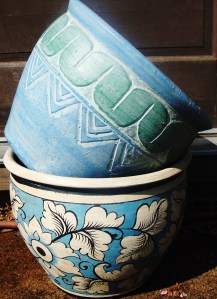
New Pots
Last night, I went to a big box store and lugged two huge planters to the check out counter. On my way to the counter, six people tried to help me, one engaged me in a conversation about tomato plants (of which I know nothing) and one chortled at the slogan on my t-shirt. [IT Survivor for the curious.]
Within seconds, the check-out clerk and I were laughing about how early we get up and my warning to him to never become an old menopausal woman. In a short time, I learned his name, alma mater, and job resume. He was concerned at how I was going to get those planters in my car and insisted on calling in backup to help me to the car. Our banter did not slow down the check-out process, but it certainly improved the waiting on the debit card approval.
In my experience, these things do not happen in other regions of the country. Our sense of humor, our insistence on personalizing impersonal experiences, and our curiosity about one another are great strengths. We are front porch people.
The nation as a whole is becoming more homogenous. We watch cable news, but not the local news. Gone are the local talk radio shows. Community owned stores are suffering in the wake of the big box stores and dropping like flies. Our small neighborhood churches are losing membership to the big, mega churches. We consume the same media, goods and experiences as the rest of the country and in doing so we leave our front porches to barbeque on the back deck – or worse, go inside to watch cable television.
Sitting on the front porch, hollering “hey” to our neighbors sitting on their front porch, and watching the people drive by are just another means of connecting to one another. It’s a tremendous community-building activity.
Building community is critical to economic and social success. When we know and appreciate our neighbors, we become invested in their lives. If they own businesses, we patronize them. If they’re out of work, we help if we can. We help carry pots in from the car and we babysit one another’s children.

Admiring Petunias
Our problem is not that we’re hillbillies (in the worst sense of the word), but that the homogenization of our cultural ways with the mainstream is hurting our community identity. We need to get back on our front porches, invest ourselves in one another’s lives, and watch the ensuing transformation. When people know one another, great things happen. Helping carry pots turns into helping grow a business, helping a child succeed at school, helping a senior citizen with yard work and, thus, avoiding the big box high-rises that don’t have front porches. We need to not just admire our petunias, but one another.
We are front porch people. We need to be there more.
This post was written as part of the A Better West Virginia Challenge.
[Ironically, I do not have a front porch. It’s on the To-Do List.]