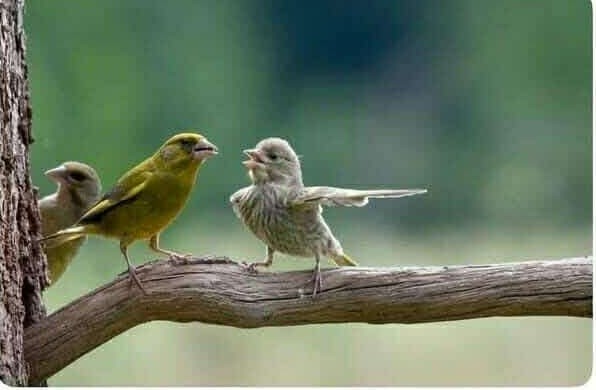
Hillbilly Diva: The Reincarnation of Florence Foster Jenkins

I have longed for decades to have the ability to sing on key.  I don’t mean an excess of talent or star power.  I don’t want to be Taylor Swift or Barbra Streisand.  I just want to be able to join in on sing-alongs.  I’d like to throw in some song to my spoken-word stuff. 

I would like to not be embarrassed by my voice.

My 7th-grade chorus teacher pulled me aside on the last day of school to tell me not to sign up for 8th-grade chorus.  I knew I didn’t have a great voice, but I hadn’t realized until then that I was hopeless. Did you see Meryl Streep in the movie Florence Foster Jenkins?

That would be me. 

Really. I once sang Twinkle, Twinkle Little Star to my son when he was a toddler.  He put his tiny hand over my lips and said, “Mama, no.”

I’ve always said you can tell life is not a performance because no one breaks into song at the grocery store.  Well.  If I could carry a tune, I would dance and sing my way through the Kroger and everywhere else.  Every once in a great while, I will break into Onward Christian Soldiers at the office on a particularly frenzied day, but I’ve worked there for 20 years.  They’ve seen me vomit into my wastebasket.  There, I have no shame, though perhaps I should. 

My last best friend, the one who suddenly died exactly six months after my dad, attended Ohio University on a voice scholarship.  She very seldom sang – she said she had ruined her voice with cigarettes and nonpractice. I wanted to throttle her. 

Susan maintained that everyone could be taught to sing on key.  And I told her, “No, you don’t understand.”  But she insisted. 

So, we sat on the steps of her wonderful porch one beautiful day – I think it was about this time of year – and Susan tried.  She’d sing a note and tell me to listen and then match it.

I laughed. “Susan, if I could do that, we wouldn’t be here.”

But she insisted.

After about 20 minutes, she shook her head and lit a cigarette.  I could tell she was trying to find the right words.  Finally, she said, “The problem is you hear everything.”

I said, “Well, yeah.  What is your point?”

She said, “You can’t seem to separate the notes.  You use them all at once with a few extras thrown in.  I’ve never seen this before.”

I just laughed. I felt vindicated. But I also felt like a freak of nature.  

But I do hear everything. I am not a visual learner.  I am auditory.  Give me a good speech or lecture.  Forget the PowerPoint.  I can listen to you, or I can read the PowerPoint slides, but I cannot do both at the same time.

I do not use music as background noise. I may not be able to carry a tune, but I have a good ear, and that just adds insult to injury. When I listen to music, I sit and I listen fully lost in the sound.  I do not listen to music in the car unless it’s a long road trip with little traffic; otherwise, I would be a menace on the road.  Well, even more so than I am. 

[An aside, I do not confuse the sounds I dance to with the music I listen to.]

I would also like to play an instrument or two or three.  But that desire pales in comparison to the singing thing. 

Yes. I would be a one-woman show everywhere I went if only I could carry a tune. 

What happened next?

Marina continued although a little distracted.  The show must go on reverberated in her head.  She forced herself to pay attention to the person sitting across from her.. She had to work very hard to stay in the present as her heart was visiting the past and her soul was questioning the future. When she was done, even more spent than usual, she went to her hotel room. Normally after a performance, she would shower and anoint herself in almond oil. Massaging each foot, each limb, each hand. She would end by caressing her face and then wiping her hands on her long wet hair. Her people had oiled their hair for centuries. 

But after this one, after she sluiced off the intimacy of strangers, she sat on the edge of the bed and stared at herself in the mirror – trying to read her own eyes, trying to make sense of 30 years collapsing in one minute. 

Did she want to try and find him.  Would he contact her?  She stared at herself. 

Did she want to see him? 

Once again, he paralyzed her.  When with him, she was a slave to the oxytocin and dopamine coursing through her body, addicted to his touch on her skin, helpless in his examination of her eyes.  She had been in danger of losing herself –of being consumed by a passion so intense it would incinerate her will.

The phone on the nightstand rang.  It took her a moment to place the sound.  She answered with a soft “Hello.”

“Ms. Abramovic, there is a gentleman here to see you.”

“Is he wearing a shirt with a red collar?  With kind eyes?”

“Well, I don’t know about that last part, but yes. That is what he is wearing.”

Please tell him I can meet him in the bar in about 20 minutes.

Marina continued to sit staring at her whole self in the mirror. Sitting here naked she did not feel as exposed as she did when looking into strangers’ eyes.  Far more exposed when she looked into his eyes.   

She stood and pulled on her old, very faded and threadbare Levis.  She wore these back when they were together.  The denim was an old friend grounding her to her past but allowing her to venture into her future. 

She rummaged around in her suitcase looking for something besides a t-shirt but she wasn’t coming up with anything she felt appropriate to the occasion or the place. Finally, she decided on a white silk camisole over which she threw on the cardigan she’d bought in Nepal shortly after they had parted. 

With no makeup, no perfume, wet hair and barefoot, she quietly closed her hotel room and padded down the corridor to the elevator. 

She didn’t know what she would say. 

She didn’t know what she wanted to say. 

Thirty years had fallen away in a minute.

What would time do this evening?

*****

NOTE: I was shown this video as a writing prompt and told to write what happened next.

Fractured Ekphrastic: The Conversation

Alice R. Henderson is believed to have painted the piece attributed to Matisse titled The Conversation.  The image is that of a dark-haired woman in a black robe sitting in a chair.  Standing opposite her is a red-headed man.  He is wearing pajamas.  The expressions on their faces are familiar but hard to put to words, although it is clear the woman is not happy.

Persephone wants to leave early, and Hades won’t let her. For six months of every year, for centuries now, she has gone to the underworld and hidden herself away.  The earth transitions to winter during her confinement, and the people long for a return to warmth and growth. But Persephone is forced to stay in her chambers and slumber. She is weary of sleep.  Weary of stillness.  Weary of the silence.  

The look Alice R. Henderson painted on their faces is one of yearning and discontent.  The people who line up to view this painting, all of them, instantly vibrate.  They know that look.  They know the feeling is uncomfortable, but they don’t have the words.  They can’t have The Conversation.

They want to.  Oh, how they want to.   Everyone views the painting and regards it as a Zen koan.  They don’t know what that look is, but when they leave, they are transformed.  They make changes.  They leave jobs, they leave marriages, they leave countries.  When asked to explain, they say nothing, or they say, “I don’t have the words” or they say “Go see the painting.” 

They know the feeling is uncomfortable, but they don’t have the words. They know the feeling provokes change.  They have had the conversation and expressed their discontent and expressed what it is they yearned to experience. The conversation between their heart and their brain was silent, but the silence reverberated. It is revealed in the lives they go on to live.

Persephone wants to wake.  She wants to return to warmth and growth.

Note: Alice R. Henderson was Matisse’s scullery maid. 
He noticed her artistic promise when he saw her drawing rather than eating during her meal break.
It has been alleged that Matisse’s departure from the open, spontaneous brushwork of his Fauve period in favor of a flatter, more decorative style coincides with Henderson’s employment at the Matisse residence.
No one is sure how much of what is attributed to Matisse is actually Henderson’s work.

*****

[An aside: As are many of my stories, essays, and poems, this one began as my response to a writing prompt.

For this one, we were given an image of an older woman holding a candle (I think-we were only given a moment or so to view the painting.]

The image was accompanied by this text: What story did she recreate as art?

There is no Alice R. Henderson. Matisse did indeed paint The Conversation, and it is a self-portrait of the artist and his wife. Matisse is an interesting guy, but so too was his wife. It has been postulated that many of Matisse’s shenanigans were orchestrated to draw attention away from his wife while she was working with the French Underground during the Nazi occupation of France.

This enigmatic piece has haunted me for years.]

The Embers

Photo by Michał Mancewicz on Unsplash

It took all the coordination she could summon, but Brenda crawled out of the sleeping bag, unzipped the tent, and was able to stand up without falling down. She had to pee.. 

I hate camping, I hate camping, I hate camping – the refrain was on repeat in her head as she made her way to where she thought the latrine area was.  Brenda unzipped her jeans and squatted, careful to spread her legs wide so as not to get urine on them. 

I hate camping. I hate camping. I hate camping.

As she was making her way back to the tent, she noticed that Mike was still sitting by the fire. It was dark, but still, the situation didn’t look or feel right.  Brenda headed over to check it out.

Mike was sprawled in his Big Man’s camping chair.  His feet were propped on the stones of the fire ring. The toe of his left tennis shoe was smoldering.

She tried to rouse him, but he was out good.

“Mike, dammit, wake up.  Your shoe is on fire.  Mike!”

Nothing.

He didn’t even twitch. 

Brenda looked around and spotted the plastic tub of dishwater.  It hadn’t been emptied after the dishes were washed. She grabbed it and poured the cold water with bits of floating food and grease over Mike’s shoe.

The fire was out, but so was Mike.  Still, he hadn’t moved a muscle.  She felt his forehead.  He was clammy and cool.  She couldn’t gauge his color in this light, but something was wrong.  Really wrong. She ran to the tent to get her cell phone.  Signals were bad up here, but she’d found one spot in the middle of the road where she could pull in two bars. 

She woke Craig and told him what was going on.  Mike was his best friend and had been for 30 years.  Craig raced out of the tent without even pulling on his jeans.

Brenda managed to get a signal long enough to call 911 and for them to lock onto her GPS location.  Help was on the way, but she knew it would take a while. They were deep into the Monongahela. She hoped they sent someone familiar with this camping area. Otherwise, it could be hours before they would be found.  She didn’t think Mike had hours. 

Craig dragged Mike, all 275 pounds of him, out of the chair and laid him on the ground.  He barked at Brenda to get something to use as a pillow.  He was afraid Mike would puke and choke on his own vomit.

By the time the EMTs got there, Mike’s breathing was shallow, and he was shivering — still unconscious.

The taller EMT, the one who had been driving, asked about possible drug use. Craig looked at Brenda, and she at him. Finally, Craig said, “It’s possible.  He’s been in recovery six months.  That’s what we’re here celebrating.”

“What substance?”

“Anything he could get his hands on.”

“Meth?”

“Sometimes.”

“Fentanyl?”

“I never heard him mention that one.”

The other EMT administered Narcan, and Mike bolted up, screaming for them to leave him alone. 

Tears rolled down Craig’s cheeks.

Brenda was just disgusted.

Craig had hoped.  Brenda had written Mike off years ago after he’d stolen her jewelry to pawn. Her mother’s wedding rings were never recovered.

The EMTs were patient with Mike and oriented him to time and place.  Brenda was surprised he agreed to go to the hospital. 

After the ambulance left and Craig put his jeans on, Brenda sat in Mike’s camp chair. Her sympathy for Craig was bottomless, but so was her impatience. Mike had burned every bridge but Craig.

Craig was jingling keys and hollered at Brenda that he was ready to go.

Brenda sat very still and quietly said, “I’m not going.”

“What?”

“I said I’m not going. I’m done. Just done.  I’m done with Mike, and I’m done with camping.  I’m not going to sit in the ER for hours waiting for them to discharge Mike.  You know they can’t commit him, and he won’t self-admit. He needs real rehab.  He sees you as his safety net.  Stop being a sucker, Craig. It’s time for tough love.  Do not go sit there.  Don’t bring him back here. Let him figure it all out. I want us to pack up and go home.  I hate camping.”

The sun was coming up now…Brenda could see the eastern sky begin to turn pink and golden light rim the tops of the mountains.  Birdsong was filling the forest.   

She and Craig silently broke camp. Silently packed the car. Craig’s last act was to put out the fire while Brenda waited in the car. He shoveled dirt on the still glowing embers, suffocating the last bits of the fire.

Still silent, as if speech would somehow break the spell, they pulled out of the forest.

Brenda didn’t know where they were headed.