I want a word that means to feel it all at once. To include the cognitive dissonance with the revelation of divine knowledge. To embrace the sacred and the profane. I want that word to recognize that I can be at peace and at war within myself at any moment, either one or both simultaneously.
To feel it all at once is to glimpse the mind of the creator. Perhaps. I want the ennui and the exhilaration of my being to dance. A tango. Slow, deliberate, sinuous, winding about one another until the boredom embraces the joy reaching crescendo. And then there is silent acceptance of both when the music fades.
This is my life now. I don’t want to call it a new normal. I despise normal – always have. I have striven all my life not to be average. I’d rather be a failure than just fade to black.
This life, the one right here, the one that I call a trainwreck, is mine and I don’t want to shut down any part of it. It has become who I am.
I was in a trainwreck one time. Really. I hit a train. It makes for a great party story.
And that is my goal: to ferment all of this into a story that both bears witness to the tragedy and provokes laughter at having trried to overcome it all and only sometimes succeeding. I want to coin that word.
If we can’t laugh, we can’t cry, and both are necessary for either to have any potency. Any meaning. Any effect.
I want a word for all of this. These events and feelings and effects have shaped me and continue to shape me into a person I hardly recognize, but who is resolutely and most definitely me.
This appears to be fake. WXYZ is a station in Detroit. An internet search doesn’t bring up anything but social media sites.
It’s important to have a retirement plan. The statistics reveal that many people, especially men, die within a few years of retirement. The key, they say, is to be active and have hobbies that you enjoy.
I don’t think I will have any problem with that, but I do worry about being physically active since my hobby – my avocation – is writing. The older I get, the harder it is to be mobile for any length of time, so I need to nip this in the bud.
I’m not really an exercise kind of chick aside from yoga. And yes, I will quickly enroll in a yoga class once I’m fully retired. But I don’t think that’s going to be enough.
So, perhaps you can imagine my delight when I ran across the (fake) news story of a Florida woman who dressed as a pirate, complete with an eye patch, drove to the mall, dropped a kayak into the fountain, got in the kayak, and hollered “Ahoy me maties” and “Surrender your booty” at passing shoppers.
Now, first of all, carrying that kayak from the car to the fountain was a good workout. And if you’ve ever been in a kayak, you know that just getting into one isn’t all that easy either. And then to row while entertaining a growing crowd? Now that’s a workout.
The arrest part is unfortunate, but perhaps one could get a permit or such? It would add so much pizazz to the boring Silver Sneakers workout. And that doesn’t even factor in the exercise of shopping for pirate costumes and accoutrements.
The tri-state area has several fountains. There’s one at Ritter Park and, of course, the one at Marshall, but it would be gauche to do such a thing at a memorial. Of course, the mall has one or did. I haven’t been in the mall for years. There’s one at Pullman Square, I think. The Civic Center may have one. And that doesn’t even count the surrounding towns. I would stay busy both performing in the fountains and searching for new fountains.
I could also branch out into rivers and creeks. I think performing on the Ohio River at Picnic with the Pops would add an extra layer of entertainment for the participants. And there’s that manmade lake at Barboursville Park. Four Pole Creek meanders through Ritter Park, which hosts all sorts of events that could be improved with a pirate ac
After a certain amount of time, I could recruit for a crew. Just think. An armada of kayaks bearing old women in pirate costumes! Who could have imagined I’d reach fame in my senior years?
Is it somehow cognitive dissonance to demand an interlude much less an interlude of tranquility to manifest out of thin air? I think so.
Tranquility, I think, grows slowly. It is not rushed, demanded, or ordered about. It is a rock hosting moss – the green coating develops slowly and requires one to be still.
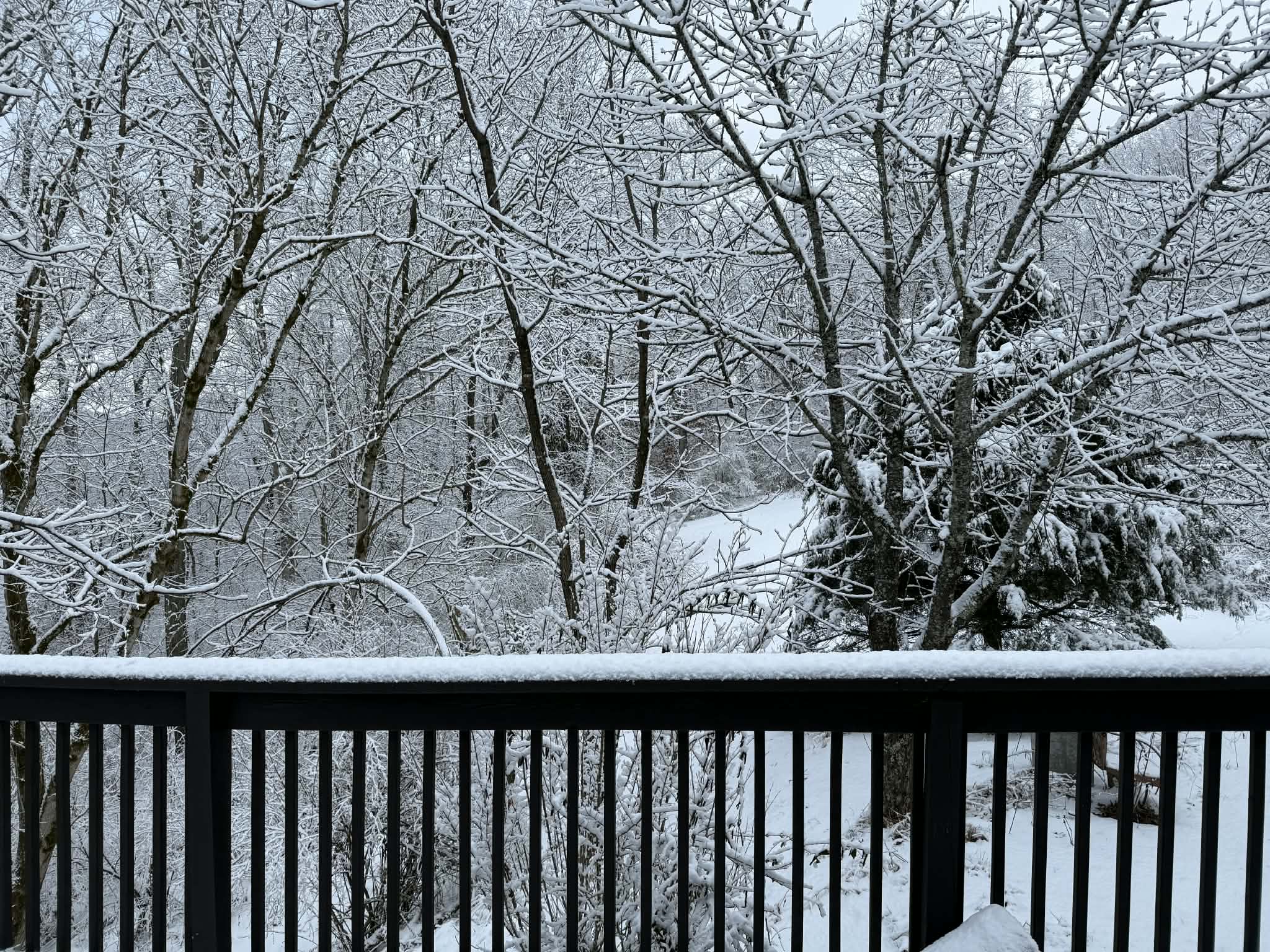
Tranquility can be – is – precarious. For most of us, it can be destroyed in an instant. Soft falling snow on a peaceful landscape turns into a tree crashing through one’s roof. Or frozen pipes burst. Or the power goes out. The quiet happiness of home and hearth is destroyed in an instant.
To disassociate so rapidly from tranquility, deep and quiet and blissful, to stress. To disaster. To mayhem. Is perilous
and
dangerous and damaging.
A disaster of its own.
Modern life is not adapted for this.
The natural biological response for these incidents is for the primitive brain – the one we aren’t allowed to operate with in this the first quarter of the first century of the latest millennium – to take control. Due to this, because of this, as a direct result of this, our bodies and our brains are flooded with the chemicals that depend on fight, flight, or freeze, and we are allowed to do none of those and be deemed to be good people, good parents, good employees, good anything.
And they certainly do nothing to help us with the situation at hand.
But there we are — swimming (treading water or maybe drowning) in the toxic miasma of an old response inadequate to the disaster at hand. And so we need an interlude of tranquility to reset and restore, which now feels like an impossibility.
I can demand satisfaction.
Challenge the fates to a duel.
Rail against an unjust universe.
Or I can sit quietly here with my right hand on my heart and my left hand petting the small, rhythmic breathing bundle of unconditional love known as Emmylou-the-Dachshund and wait for the moss to grow while I meditate on all the good things still available to me.
I would have loved to have had an eavesdropper to a text conversation I had yesterday.
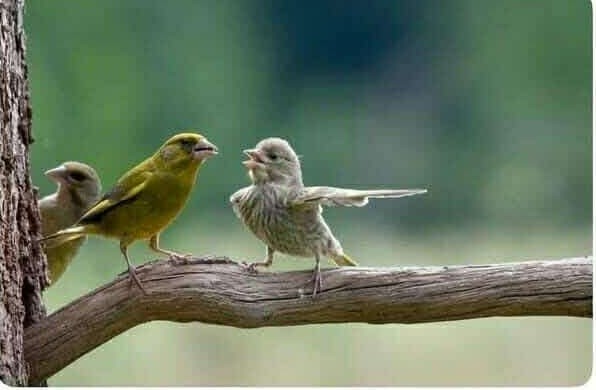
Photo by Polish photographer Jacek Stankiewicz.
I’ve been big on drawing boundaries for the past two years. I have or had some people in my life who just either take me for granted without any reciprocity or just downright treat me badly.
As appropriate, I’ve been calling out their behavior and telling them I won’t have it any longer. A few of them I’ve said goodbye to.
Yesterday, I got a text message I didn’t understand. After re-reading it – understanding dawned on me. I explained I knew nothing about any of it and couldn’t comply with their request. They were gracious and understanding. I then texted the person who provoked the original text. I got a very curt response, though I hadn’t been adversarial, placing the blame on me. I had been sure it wasn’t malicious. I was concerned. This was someone I love and someone who loves me. I said, “That smells like gaslighting.” They spit out defiant and terse words through their fingertips into a texting app that was the very definition of gaslighting. Noxious smell confirmed.
I gave no warning. That person is now completely out of my life like a boil on my butt that has been properly excised by a medical professional.
And I feel proud of myself. I will mourn the loss of the love we had for one another. Not loss. I think love never dies, although it can stagnate. That’s where we are now.
In my quest, begun two decades ago, of working when possible to accept folks and their quirks, me included, I put up with a lot of bad and questionable behavior. Including from myself. Due to the circumstances of my life and my own innate personality, I have had a lifetime of people-pleasing. In fact, this holiday season has revealed a few more folks who are taking advantage of that aspect of me. There will be warnings if warranted, but I will be excising boils like a surgeon of exceptional skill if need be.
I am now, very much, all about pleasing my own myself. I have always been a hedonist, but now I will insist on emotionally healthy pleasure.
People-pleasing is not in and of itself a bad thing to do. Be kind. Be a mentor. Be a friend. Say please and thank you. Especially thank you. Be lavish with compliments and praise, but don’t do it because you fear what will happen if you don’t. That makes it inauthentic. Do it because in a truly genuine manner, and not because you are trying to avoid their unpleasantness if you don’t. If you do it to keep the peace or to avoid confrontation, that’s not healthy. It shouldn’t be a coping mechanism to just get through the day. Needing to always walk on eggshells is poisonous to the heart, the soul, and the mind.
Perhaps this is just the wisdom of age. I don’t know, but I am going to work very hard from here on out to both accept folks for their quirks (still including myself) while also having boundaries firmly drawn with a large paint brush. Bright red paint, I think, to signal a warning. Boundaries have been drawn to keep me from returning to my bad habit. Boundaries drawn to protect me from those who would take advantage. Boundaries from the parts of myself to keep me from using toxic coping mechanisms.
My tranquility is primary now, and that will require nurturing and reciprocal relationships that aren’t just loving, but respectful. Still including the relationship I have with myself. Especially that one.