in time of daffodils – e.e. cummings

Blue Skies and Daffodils Are a Comin’

Daffodils make my heart sing each and every spring since I saw my first one — I would have been about 15. I hadn’t lived in places that had daffodils. It was love at first sight. I planted a hundred daffodil bulbs about 32 years ago. They multiplied and multiplied. I think it accurate to say that I have thousands now.

I ran across e.e. cummings’ poem some years after that. It too was love at first sight.

in time of daffodils(who know
the goal of living is to grow)
forgetting why, remember how

in time of lilacs who proclaim
the aim of waking is to dream,
remember so(forgetting seem)

in time of roses(who amaze
our now and here with paradise)
forgetting if, remember yes

in time of all sweet things beyond
whatever mind may comprehend,
remember seek(forgetting find)

and in a mystery to be
(when time from time shall set us free)
forgetting me, remember me

The Revolt

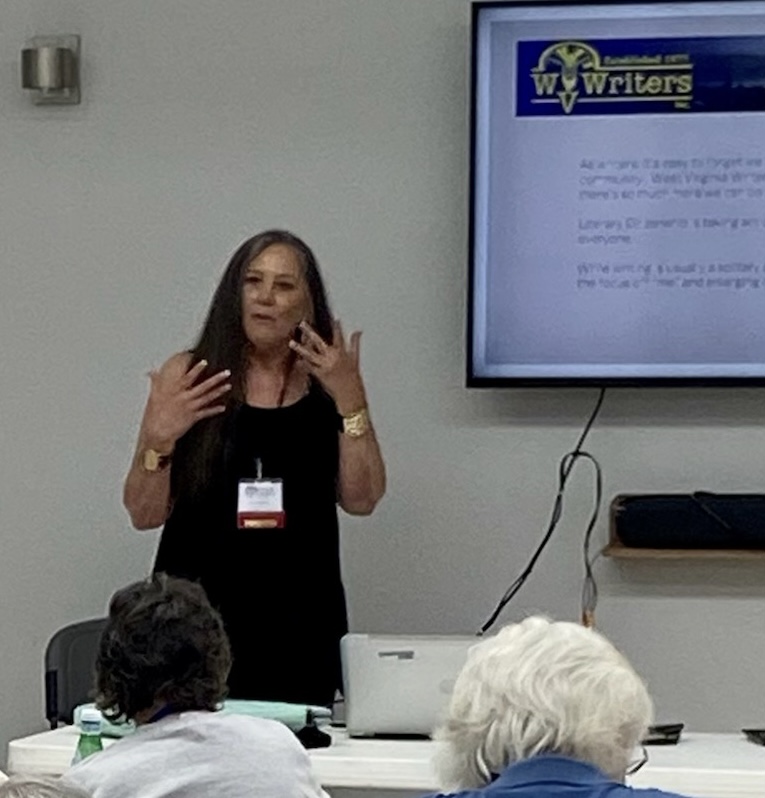
Me at 13
The Revolt

My hands cramp, fingers arching backward.
Arthritis. Two Advil daily.

My lower back aches, stooping my spine.
My arches continue their path to flat.

It feels like betrayal this revolt.

I was supple and graceful once upon a time.
First a disco queen and then a yoga diva.

This revolt surprises me.
The me that was me that will always 
be me is still there.

But aging and menopause have not been kind to me.

I tell the young’uns not to get old ---
there’s no future in it.

My arm wattles jiggle when I do goddess pose.

Oh, how I wanted something to jiggle when I was 13.
Unnaturally thin for most of my life,
I longed for hips and breasts.  
I had neither until the hot flashes were spent.

This extra weight is foreign to me.
There doesn’t seem to be a map for this territory.

I am frequently besmirched by the 
indignities of old age.

The beginnings of incontinence,
dull dry brittle hair,
my oily skin suddenly flaky and wrinkled.
But the acne has persisted.

I buy moisturizer and acne remedies.

I’ve quit wearing eyeliner.
The crepe underneath my eyes
prevents a straight line.

My beloved shoes languish in the closet.
My balance precarious --
four-inch heels may be my past.

This menopause cleavage astounds me.

Oh, how I had longed for breasts and 
now am plagued by underwire.

This revolt aggravates me.

My visage in the mirror a shock.
Who is that woman?

I feel weighed down by this body in revolt, 
but I practice yoga and I continue to dance.

My spirit intact.  
The me that was me that will always be me 
is still there.  

In revolt against the revolt.

Turkey Stuffing Almost Like My Dad Used to Make

Step One: Using the lid of the turkey roasting pan that you lusted after for years and you finally inherited from your dad – the lid that is never used in turkey roasting because the pan never was tall enough to hold a 20lb turkey with it on — pour the two bags of the seasoned bread cubes you bought at the Kroger — Pepperidge Farm Sage & Onion, because you can’t find Brownberry Ovens brand any longer.

Step Two: Chop up two huge onions into cubes roughly half the size of the bread cubes. Use the knife you got as a wedding present for your failed marriage and the cutting board you inherited from your dead lover.

Step Three: Using the knife, sweep the chopped onion into the roasting pan lid on top of the bread cubes.

Step Four: Still using the knife and the cutting board, chop two bunches of celery into slices roughly a quarter in thick. If the stalks are wide, cut them in half vertically first.

Step Five: Using the knife yet again, sweep the celery from your dead lover’s cutting board to the lid of your dad’s turkey roasting pan.

Step Six: Using the wooden spoon like the old one your great-grandmother gave you years and years ago for your abruptly ended engagement just six weeks before the wedding, stir the onion, celery, and bread cubes together.

Step Seven: Eat a handful of bread cubes, raw onion, and celery, remembering how you used to sneak it when your dad wasn’t looking.  Not that he would have cared.

Step Eight: Using the wooden spoon and your fingers, stuff as much of the bread cube mixture as you can into the cavity of the turkey. Remember the time you forgot to remove the giblets and neck. Laugh.

Step Nine: Put the heavily buttered, salted, peppered, and stuffed turkey into the oven.  Don’t forget to preheat the oven.

Step Ten: Fish around for the large glass baking dish from who-knows-where.

Step Eleven: Pour the remaining bread cube mixture into the glass baking dish. Wonder what happened to the blue and white Corningware that your dad always used.

Step Twelve: Dot with butter (real) and moisten with giblet/neck broth you have simmering on the stove with a bay leaf. Laugh again about the year you didn’t take them out of the turkey before stuffing.

Step Thirteen: Cover the dish with tin foil and set aside until the turkey is done. (Sneak a handful of moistened bread cube mixture first.)

Step Fourteen: Gather the dirty utensils – the knife, the cutting board, the wooden spoon. Remember your wedding and the photograph of you pretending to stab your new husband with the cake knife.

Step Fifteen: Remember your dad asking, “Punkin, is this what you want?” just before he walked you down the aisle.

Step Sixteen: Stare out the window and wipe the tears.

Sacre` Bleu! Minoan Blue Monkey Frescoes

NOTE: A million years ago when I was young, attractive and a middle-aged student at Marshall University, I wrote a paper that captured my imagination and secured my love of Cultural Anthropology. I had enormous fun writing this paper. Beware: it’s long — something like 33 pages long. I am posting it to archive it. You’re free to read it, of course, those who do report not only being interested, but amused.

NOTE #2: I sometimes refer to myself as once the world’s foremost authority on Minoan blue monkey frescoes. I would hope someone has cleared up the question as to why an ancient people in what is now Greece were drawing blue monkeys on their walls.

Sacre` Bleu!: Minoan Blue Monkey Frescoes

What ultimately gives a culture its character is its thought,

and that– in a prehistoric context– is the most elusive characteristic of all….

Nevertheless, the Minoans left thousands of clues to guide us.

[Castleden, 1993, p. 123]

Introduction

This paper began as an attempt to sate my curiosity as to why a prehistoric people on an island in the Mediterranean felt compelled to paint monkeys – an animal not native to the area – and, moreover, why they chose to do so with blue paint. The paper ends with the development of my own, apparently unique, theory.

These prehistoric people, the Minoans, are generally believed to have developed a sophisticated culture on the island of Crete. Minoan or Minoan-influenced settlements, some argued to be colonies, are also found on the islands of Thera, Kythera, Rhodes, Naxos, Karpathos, Kea, and Melos, and on the Anatolian coast [Castleden, 1993, p. 117]. The differences between Neolithic assemblages and Early Minoan ones are sufficientlydissimilar as to suggest the Minoans were immigrants to the island, although Watrous discusses internal factors that may account for the cultural breaks [Watrous, 1994, pp. 703-704]. The material evidence of the Greek mainland during the Bronze Age suggests the Cretan Minoans were not the ancestors of the people who became the Classical Greeks [MacKendrick, 1981, p. 61]. Sometime after the volcanic eruption on Thera, the Minoan civilization began to dissipate, eventually to be replaced by the Mycenaean culture of the Grecian mainland.   Their origin and demise is mysterious, but they left enough artifacts on Thera alone that “[e]ven if [Doumas] had the money- which he does not – to pay more restorers, the sheer weight of the archaeological evidence would occupy hundreds of people for decades.” [Ellis, 1998, p. 187.]

In “sound-bite” descriptions of Minoans, the bull leaping, polychromatic art/architecture, and undeciphered Linear A script are almost invariably mentioned as is speculation about status of the women. Yet, one does not have to delve very far into the literature to find mention of the blue monkey frescoes on the walls of a “palace” and other structures. They are held as examples of trade connections, serve as examples of the Minoans use of color, and have been used as evidence of Minoan colonization.

Continue reading