Maisie Anne The Fae

Maisie Anne O’Keefe looked to be Black Irish – that sumptuous result of Spanish DNA and Irish DNA colliding, but in reality she was Scots. 

Upon her birth, both parents looked at the other and said, “This wee one does not have red hair.”  Both were present at the home birth, or they might have wondered if babies had been confused in the nursery. Maisie Anne was the 7th daughter of a 7th son and and the 7th daughter of a 7th daughter.  Gossip had been rife throughout Adelaide’s pregnancy.  This child is fae, the village folk whispered.

And indeed, Maisie Anne O’Keefe grew into the reputation the village folk had invoked with their words.
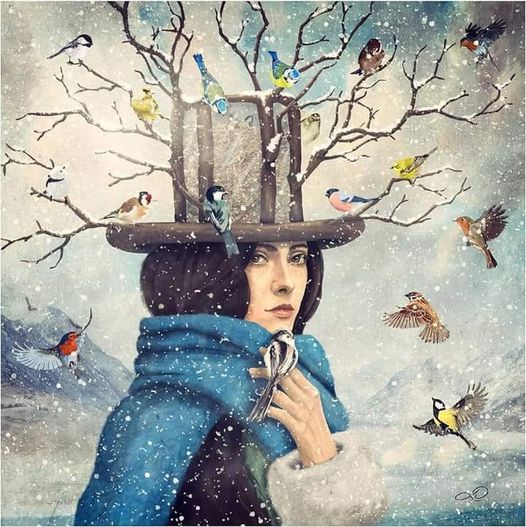
Art by Paula Belle Flores

While still small, she exhibited an affinity for and a bond with birds.  Any time she left the cottage, the birds would gather about her.  As they grew bolder, they would perch on her shoulders, her hands, her arms, and even her black tresses.  As time went by, they began gathering at her doorway each morning eager for her exit. 

She kept seeds and whatnot in a pouch tied about her waist and she would feed the birds as she walked to the shoppe in the square where she served tea.

One winter began early and was fierce.  The snows came and stayed and she didn’t have enough seed on hand to adequately feed all the birds that waited outside her door.  She feared for the birds though she wasn’t usually prone to fear.  The birds, the villagers whispered, were her familiars.  Maisie Anne thought of them as her children as the years had gone by and would-be suitors were too intimidated to woo her.  Her parents had died, and her siblings had scattered.  She alone lived in the cottage and had meager means.

That evening she set to with the saw her father had used as well as his hammers and nails.  She needed a warmer hat and the birds needed shelter from the cold.  When she was almost done, she went outside, perched the ladder to the side of the cottage, climbed up, and grabbed some straw.  The cottage had been fresh thatched that autumn and the straw was almost pristine.

When she was done, she had a hat of branches, straw, and wood for the birds to use for warmth.  They flocked to her in numbers the villagers had never seen.  When they asked Maisie Anne what she had done, she replied that she couldn’t keep them from starving, but she could keep them warm.

The following morning, Maisie Anne left the cottage sporting her hat and discovered that during the night the villagers had left bags and bags of seed for the birds and provisions for Maisie Anne.

She and her hat became a spectacle each and every winter from that time forward.  Tourists came from miles around to see the fae0 one feed and shelter the birds.  The tea shoppe did very well with the added custom and Maisie Anne’s wages were increased, but still the villagers provided for her and the birds. 
A Song of Wanderlust

My heart sings a song of wanderlust – a desire for the exotic, the unfamiliar, a need to feel like the other and not the I. 

Home, though delightful, feels heavy these days.

These walls are solid and safe, well known every inch.

I long for the strange. 

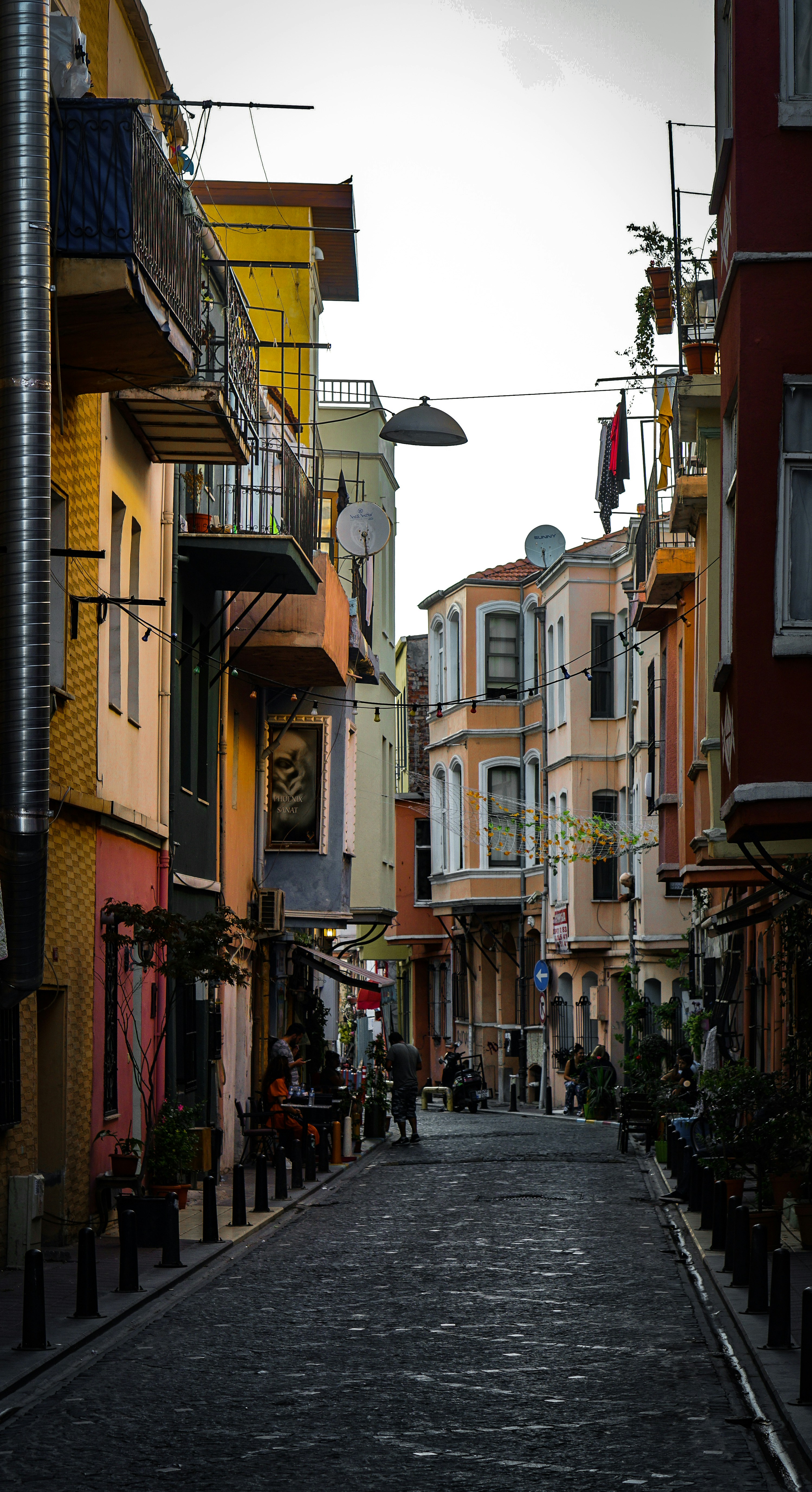
Photo by Mark Tryapichnikov on Unsplash

I long for unexpected angles and curves, passages that take me to vistas unimagined.   I want us to be a couple on a rue in Paris, a calle in Barcelona, an alley in Istanbul.  Walking where feet have trod for hundreds and hundreds of years – not just a couple of centuries. I want to curl up with you in a glass igloo in Norway and watch the northern lights. I want to hold your hand in a bure in Fiji, the thatch rustling0 in the ocean breeze.

I want architecture that begs for our attention and the camera’s lens.  Adobe, stucco, marble.  People who walk differently and speak in a tongue I can’t understand.  I want to eat food I’ve never had in Afghanistan, drink liqueurs with the locals in Greece, and witness the traumatic running of the bulls.  I want to struggle with the language when asking a stranger to take our photo.  Though we are disheveled and jet-lagged, you will put your arm around me and we will smile for the camera capturing our joy in the moment.

Continue reading

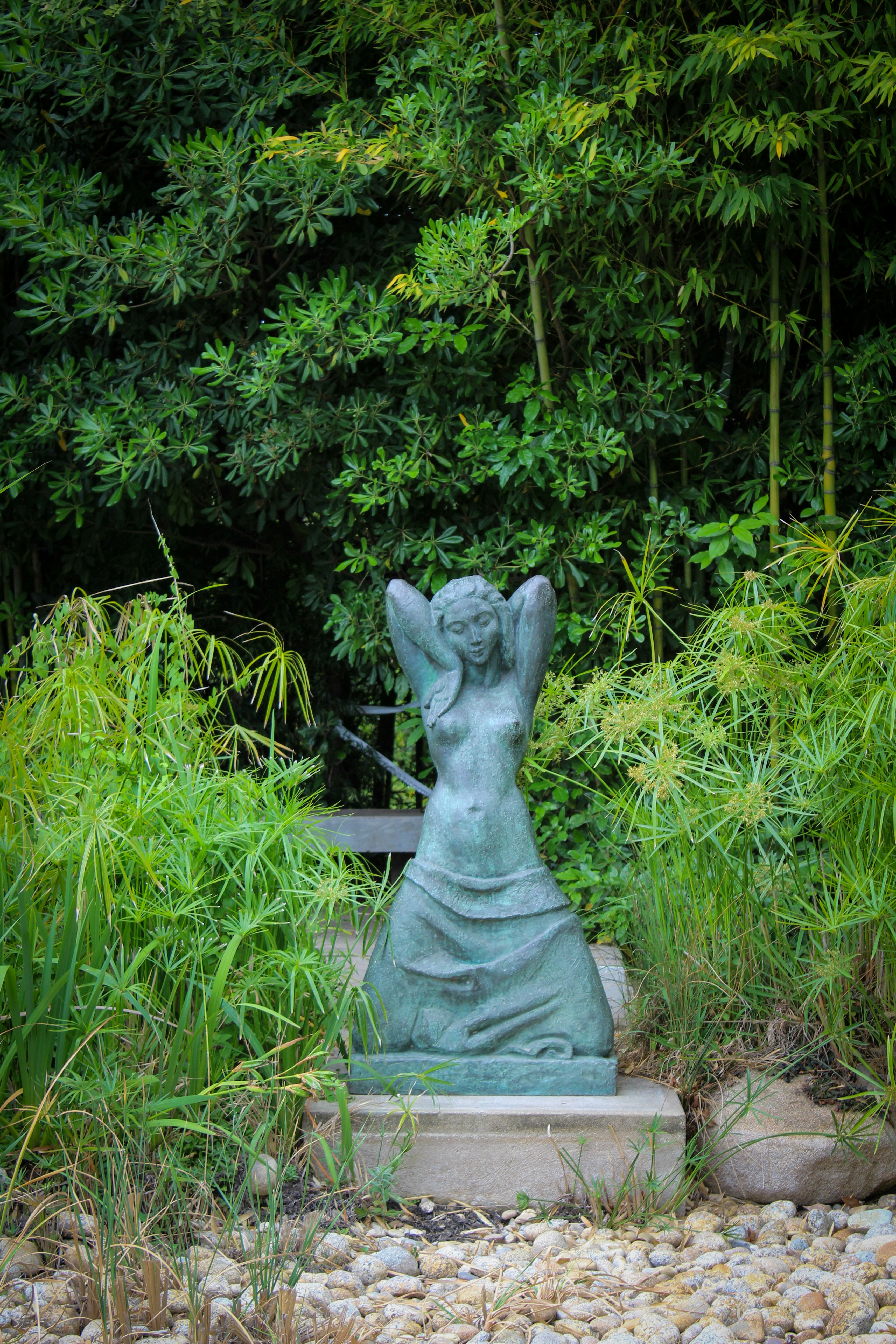
The day the statues came to life.

I realized there was something inherently strange about the way my mom’s brain works when she was about 35.  Maybe 40.  Someone told her a joke.  The joke goes like this…. 

Photo by Alano Oliveira on Unsplash

There was a statue of Adam and Eve in a public garden.  They had stood there for a hundred years.  Unable to speak.  Unable to touch.  Unable to keep one another warm in the snow.  Year after year, they stood there.  The snow came and went.  The rain.  The hot sun.  Pigeons and squirrels.  Mold and mildew. 

By the time we get to the magical day, they were worn and pitted, spotted with pigeon shit, and generally in poor condition. A woodland fairy appears and tells them she is going to bring them to life for one day and for one day only.  They can do anything they like.  She gives them 24 hours to think about how they will spend their day. 

At dawn, the following morning the fairy appears, says an incantation, waves her wand and the two statues come to life.  Adam and Eve jump around in excitement, oblivious of their nakedness, and babble incoherently.  Finally, they settle down and Adam says to Eve, “What shall we do?  What have you most wanted all these years?  Adam has a sly tone of voice and winks at Eve. 

Eve says, “OK.  Here’s the plan.  You hold the pigeons and I’ll shit on them.” 

Now I happened to be there when this joke was being told.  I rolled my eyes.  My mother laughed.  And laughed.  She spurts her coffee all over the diner table and nearly choked to death she laughed so hard.  Tears coursed down her face, and she had to fan herself. 

My mother’s reaction to the joke was far funnier than the joke itself. 

Later that evening, we are sitting at the dinner table.  My Dad asks how our day was.  We all report on this and that.  Eventually, Mom says, “Dean told a joke at lunch today.  Wanna hear it?”  My dad girded his loins. My mother’s inability to tell a joke without screwing up the punch line is legendary.  In fact, I get my joke telling ability from her.  I too tend to screw them up.  Just typing the above joke was difficult. 

Anyway. 

My mother launches into the joke, looking at me now and again to check details.  I am astonished, but she is doing a pretty good job.  My dad is sort of puzzled.  The joke does not seem to be the kind of joke my mom would normally enjoy.  My mother is a Prude with a capital P in red glitter.  She finally gets to the part where Adam is getting ready to say, “What shall we do?” 

She starts to giggle.  And then shake.  Peas fall off her fork.  She starts laughing in earnest.  She is laughing so hard, she cannot finish.  I start laughing at her trying to tell this joke.  My father, a superb joke teller, is now all ears.  He wants the punch line.  He needs the punch line.  He’s already making plans on who and when to tell the joke to. 

By now, neither my mom nor I can breathe we are laughing so hard.  I try to take a drink of water to sort myself out.  I spew it all over the pork chops.   

Mom can’t finish.  Dad is amused, but impatient.  “So, what’s the punch line?”  My mom waves her arms and looks at me to deliver the last line.  I still can’t breathe.   

Finally, I manage to choke out, “You hold the pigeons and I’ll shit on them.”  Only I said poop because at that age I would not have said shit in front of my parents. 

My mother absolutely collapses in hysterics.  For her, it’s even funnier the second time.  My brother, who is just a kid, laughs.   

My dad just looks at us.  I try to explain that I didn’t think it funny either that I’m laughing at my mother, but by then, he’s laughing at the both of us. 

I reminded my mother of this joke a while back.  It took a while for her to dredge up the memory.  And she almost had it, but couldn’t remember the joke or the punchline  — she just remembered the two statues coming to life and how it was the funniest damn thing she’d ever heard.   

So.  I told her the joke.  Without messing up the punchline. 

She chortled.  She howled.  She had tears in her eyes and couldn’t breathe.   

Again.   

I laughed at her.  I laughed with her. We both just laughed.